Project Overview
Water for Jordan's
Badia Region
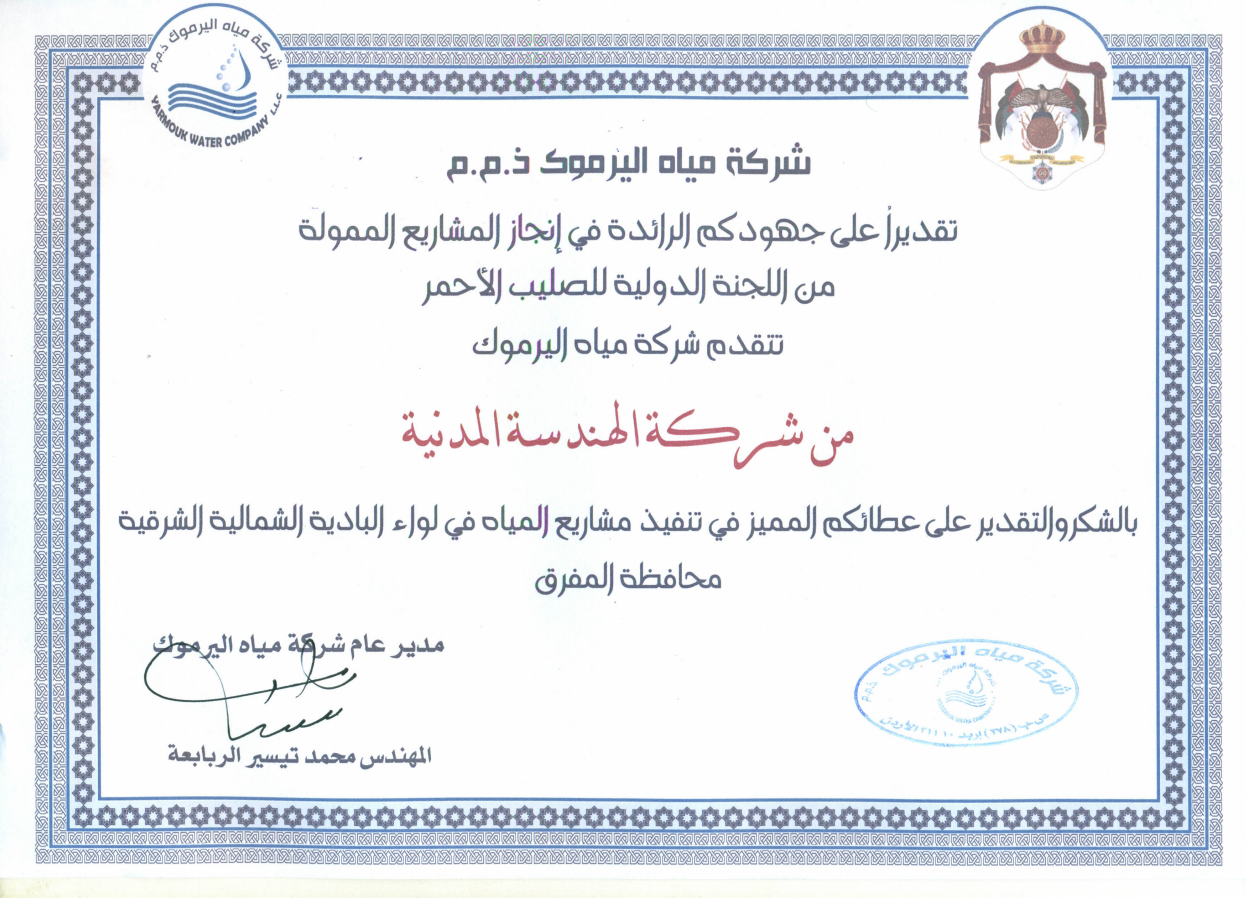
The North Badia Water Supply Project is a critical water infrastructure investment delivering piped water supply to communities in the Badia region of northern Jordan — one of the Kingdom's most remote and arid areas, covering parts of Mafraq Governorate in the Syrian and Iraqi border regions. The Badia has historically been underserved by water infrastructure; this project represents a significant improvement in water access for the region's permanent and semi-nomadic population.
CEC was engaged to deliver the water supply pipeline works — laying water mains across the challenging desert terrain of the Badia, connecting remote communities to Jordan's national water supply network. This project type represents one of Jordan's most important categories of water sector investment: rural water supply extension that materially improves quality of life for communities that previously relied on tanker deliveries or low-quality groundwater sources.
The project was delivered in the context of Jordan's broader water sector investment programme — typically financed by international development institutions including the World Bank, Islamic Development Bank, and bilateral donors — and met the environmental, social, and procurement standards that these institutions require.
Engineering Challenges of the Badia
The North Badia presents pipeline construction challenges that are significantly different from urban water network construction. CEC's team navigated each systematically:
Remote Desert Terrain
The Badia's vast, flat desert terrain appears simple but conceals significant construction challenges: hard basalt rock in places requiring specialised excavation equipment; deep sandy fills in wadis that require careful trench support; and remote site distances from Amman-based supply chains that demand meticulous logistics planning to avoid construction stoppages from material shortages.
Extreme Arid Climate
Mafraq Governorate experiences Jordan's most extreme temperature variations — from well below freezing in January to over 38°C in summer. Pipeline installation in this environment must account for thermal expansion and contraction, frost-depth burial requirements in northern sections, and protection of exposed valve chambers from temperature extremes.
Long Pipeline Routes
Water supply pipelines in the Badia cover long distances across open terrain. This requires careful attention to pipe material durability, jointing quality, cathodic protection systems for steel mains, air valve and washout installation at appropriate topographic locations, and systematic hydrostatic pressure testing in sections before the pipeline is connected and commissioned.
Crossing Infrastructure
Even in remote desert terrain, pipelines cross roads, wadis, and other infrastructure. CEC's scope included thrust boring or open cut crossings of main desert roads, wadi crossing structures, and coordination with the relevant road authority for safe working on national road corridors.
Scope of Works
- Supply and installation of water supply mains (ductile iron and/or steel, appropriate diameter) across the Badia route
- Trench excavation through mixed terrain including basalt rock, sandy desert, and wadi formations
- Pipe laying, jointing, and bedding in accordance with WAJ specifications
- Air valve, washout, and pressure reducing valve chambers along the pipeline route
- Road crossings by thrust boring to protect road carriageways
- Hydrostatic pressure testing in sections — with full test records submitted to the Water Authority of Jordan
- Disinfection and bacteriological testing before commissioning
- Connection to the existing water distribution network and final commissioning
Impact
The North Badia Water Supply Project delivered reliable piped water access to communities in Mafraq Governorate that previously lacked it — one of the most tangible improvements in living standards that water infrastructure investment can achieve. Clean, reliable water supply reduces the burden on women and children who historically manage water collection tasks, improves household health outcomes, enables productive agricultural activities, and supports the economic development of the region.